Small Batches. Slow Methods. Enduring Standards.

The Honey That Doesn’t Taste Like Honey!
Discover why stingless bee honey (madu kelulut) is different from regular honey. Learn about its unique taste, trehalulose content, and science-backed benefits for modern wellness.
STINGLESS BEE HONEY
Ancient Gift Farm
3/17/20261 min read
The first time someone tries stingless bee honey, they pause.
“Why is it sour?”
It’s not the sweetness they expected.
It’s not the honey they grew up with.
And that’s exactly where the story begins.
Not All Honey Was Meant to Be Sweet
Most of us were introduced to honey as something simple—
a sweet drizzle, a sugar replacement, something comforting.
But not all honey is the same, because not all bees are the same.
Stingless bee honey is produced by a completely different species,
and that alone changes everything.
Produced by stingless bees, this honey is:
Slightly tangy
Less sweet
More complex
Almost… alive.
For generations, it wasn’t used just for taste.
It was used with intention.
For healing.
For strength.
For balance.
The Kind of Honey Elders Kept Close
In many traditional households, this honey wasn’t taken casually.
It was given:
When someone fell sick
When wounds needed healing
When the body felt weak
Not as a treat, but as something valuable.
You don’t take it because it’s sweet.
You take it because it does something.
What Makes It So Different?
Modern science is now catching up to what was always practiced.
Stingless bee honey contains:
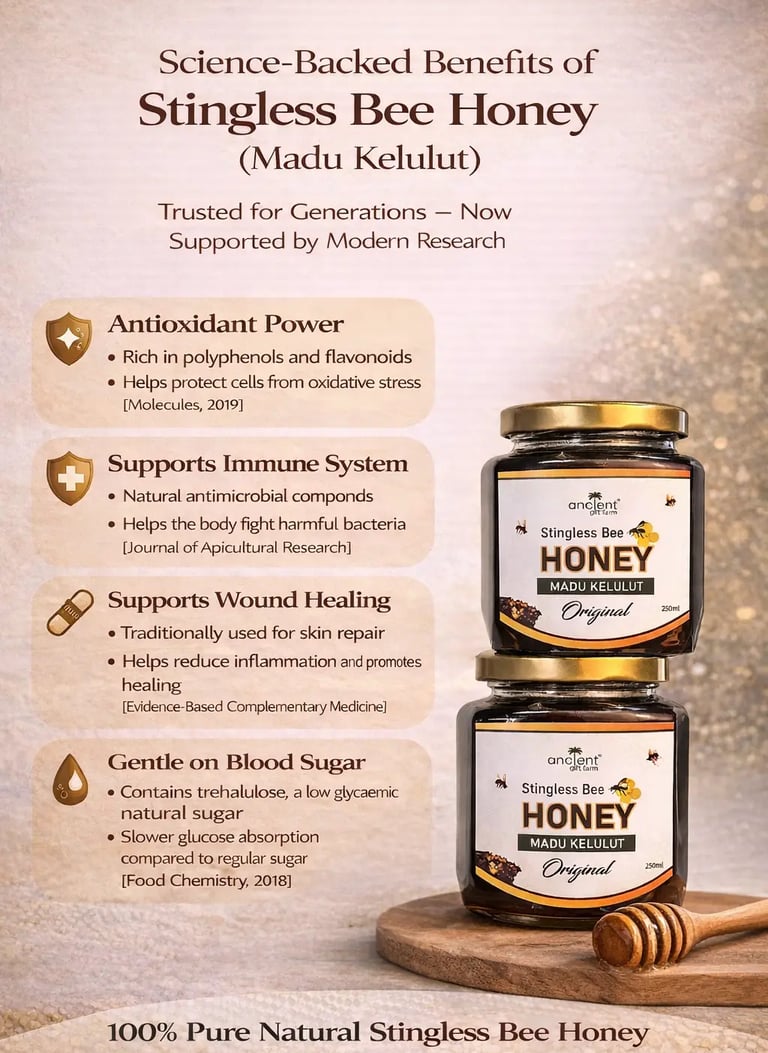
High levels of antioxidants
Natural antimicrobial properties
And something rare: trehalulose
Trehalulose is a natural sugar that behaves differently in the body.
Instead of spiking your blood sugar quickly,
it is absorbed more slowly.
Which means:
More stable energy
Less sudden crashes
A gentler response for the body
It’s still honey.
But it doesn’t behave like sugar.
👉 In Part 2, we explore why trehalulose makes this honey behave differently—and what that means for your body.
Ancient Gift Farm
Explore our sleek website template for seamless navigation.
Contact
Newsletter
sales@agiftfarm.com
+6012 610 6274
© 2026. All rights reserved.